Atlas svemira: Mala avantura jednog dječaka i velike životne lekcije
English version below
Od naizgled sasvim običnog dana – odlaska u grad po nove patike za školu – nastat će putovanje koje će jednom dječaku promijeniti život, iako u tom trenutku ni on, ni ljudi oko njega ne znaju da upravo svjedoče početku jedne velike avanture.
Filip ne kreće na put kako bi pronašao nešto veliko. On samo želi ispraviti jednu malu grešku. Ali upravo ta greška otvorit će mu vrata svijeta koji nije poznavao i dovesti ga do susreta koji će pokazati koliko snage, hrabrosti, dobrote i zahvalnosti može stati u jedno dječije srce.
Na tom putu Filip neće samo tražiti patike koje nedostaju. Pokazat će šta znači vjerovati, biti uporan, prihvatiti pomoć drugih i pružiti je onda kada je nekome potrebna. Kroz susrete s ljudima koje nikada ranije nije poznavao, otkrit će ljepotu ljudskosti, ali i još snažnije osjetiti koliko znače ljubav i povezanost s porodicom.
Film Atlas svemira rumunskog reditelja Paula Negoescua, prikazan u okviru dječijeg programa 32. Sarajevo Film Festivala, mnogo je više od priče za najmlađe. To je nježna i životna priča o odrastanju, porodici i malim trenucima koji nas mijenjaju – često upravo onda kada to najmanje očekujemo.
Više informacija o programu 32. Sarajevo Film Festivala dostupno je na zvaničnoj stranici festivala Programme | Sarajevo Film Festival.
Atlas svemira – film za djecu koji najviše govori odraslima
Naizgled obična situacija, odlazak po nove patike za školu, postat će za Filipa početak jednog od onih dana koji se pamte cijeli život. Ne zato što će pronaći nešto posebno veliko, već zato što će kroz nekoliko sati, nekoliko susreta i nekoliko malih trenutaka otkriti koliko toga čovjek može pronaći kada izađe iz svoje sigurnosti.
Kada se okolnosti promijene i kada shvati da do svog cilja neće doći jednostavnim putem, Filip ne odustaje. Uvjerava oca da može sam otići po patike, jer pamti majčine riječi da se tog dana moraju kupiti i da se kući mora vratiti na vrijeme za utakmicu Rumunije protiv Armenije. U toj njegovoj odluci nije samo dječija želja da bude samostalan, nego i tiho poštovanje prema roditeljima, prema onome što su mu rekli i prema obećanju koje želi ispuniti.
Odlazeći po patike, Filip i ne sluti kakvo iskustvo, ali i borba ga čekaju. Kada shvati da je dobio dvije iste patike i da rješenje trenutno ne postoji, ne bira odustajanje. Upravo ta dječija odlučnost da pronađe izlaz iz situacije postaje nešto mnogo veće od samog problema. Ona otkriva njegovu hrabrost, povjerenje i snagu koju često ni sami ne znamo da imamo dok se ne nađemo pred nečim nepoznatim.
Njegovo putovanje kroz film Atlas svemira nije samo potraga za patikama koje nedostaju. To je put kroz susrete koji će mu pokazati koliko ljudskosti postoji oko njega. To je priča o nepoznatim ljudima koji postaju pomoć onda kada je najpotrebnija, o malim gestama koje imaju veliku vrijednost i o tome kako nas ponekad upravo neplanirani trenuci odvedu do najvažnijih životnih spoznaja.
Filip kroz cijelo putovanje pokazuje nešto što se ne može naučiti samo riječima. Pokazuje otvorenost prema ljudima, zahvalnost za ono što dobije i spremnost da vjeruje drugima. Njegova snaga nije u tome što sve može sam, nego u tome što prepoznaje dobrotu kada je sretne i što je svojim ponašanjem nastavlja širiti dalje.
A iza svega stoji ono najvažnije, njegova ljubav prema porodici. Želja da bude spreman za susret s bratom Anduom, koji igra fudbal za Italiju i nosi broj 10, samo je jedan od podsjetnika koliko su dječiji svjetovi ispunjeni velikim emocijama koje odrasli ponekad zaborave prepoznati. Kroz Filipov odnos prema roditeljima, posebno prema majci čije riječi nosi sa sobom tokom cijelog puta, vidi se i koliko djeca često mnogo više slušaju, pamte i osjećaju nego što im odrasli pripisuju.
Upravo zbog toga Atlas svemira nije samo film za djecu. To je priča koja nas podsjeća na nešto što svi znamo, ali često zaboravimo: da se život mijenja u malim trenucima, da nam nepoznati ljudi mogu postati važni i da se najveće vrijednosti često kriju u najjednostavnijim stvarima. I da je porodica zaista mjesto kojem se uvijek vraćamo.
Putovanje dječaka Filipa kroz svijet dobrote i slučajnih susreta
Snaga filma Atlas svemira nije u velikim scenama, spektaklu ili komplikovanoj radnji. Njegova ljepota nalazi se upravo u jednostavnosti. U malim trenucima, kratkim susretima i naizgled običnim situacijama koje u sebi nose mnogo veće poruke.
Gradovi i prirodni predjeli Rumunije i Bugarske kroz koje Filip prolazi nisu samo pozadina njegove priče. Oni postaju prostor susreta, pomoći i ljudskosti, mjesto gdje svaki čovjek kojeg sretne ostavlja mali trag na njegovom putovanju.
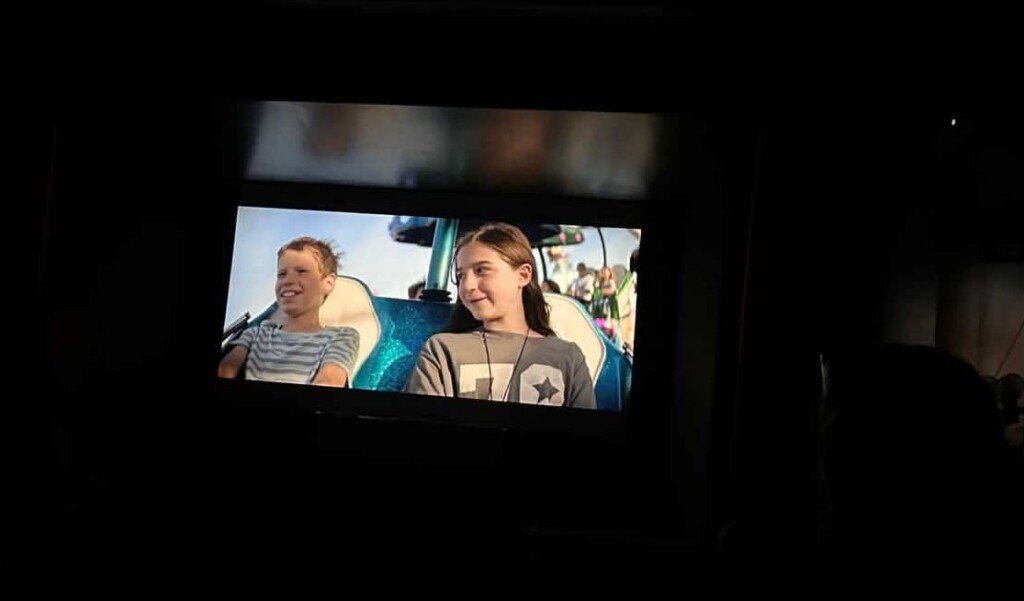
Na tom putu Filip upoznaje ljude koji mu, iako ga ne poznaju, pružaju ono što mu je najpotrebnije. Djevojčica koju ne razumije jer govori mađarski pomaže mu popraviti patike kako bi mogao nastaviti dalje.
Starac kojeg se u početku plaši vraća se dio puta kako bi mu pomogao. Dječak kojeg pronalazi usput daje mu bicikl i hranu, olakšavajući mu put koji je sam odlučio nastaviti.
Ali možda najljepši susret dolazi kroz prijateljstvo koje Filip nije očekivao. Pas lutalica kojeg naziva Mbappe, po svom omiljenom fudbaleru, u početku u njemu budi strah. Međutim, uz pomoć prethodno pomentog starijeg čovjeka kojeg sreće usput, Filip shvata da ono čega se plašimo ne mora uvijek biti prijetnja. Jedna rečenica, jedan kratki razgovor i jedna mala scena dovoljni su da promijene način na koji gledamo svijet. Jer ponekad najveće životne lekcije dolaze upravo kroz najjednostavnije trenutke.
U tome i jeste posebnost filma Atlas svemira. U samo nekoliko scena, bez velikih objašnjavanja i velikih riječi, uspijeva govoriti o povjerenju, prijateljstvu, strahu i dobroti. Pokazuje koliko snage može stati u jednostavnu priču, prirodne kadrove i iskrene dječije reakcije.
Filip nije prikazan kao savršeno dijete. On je stvaran dječak, sa svim svojim strahovima, nesigurnostima i greškama. Prije nego što kupi patike, u strahu da neće imati dovoljno novca, uzima voćku s tržnice. Ali kada shvati da su patike koštale manje nego što je očekivao, vraća se na isto mjesto i ostavlja novac. Taj mali trenutak možda traje svega nekoliko sekundi, ali govori mnogo o njegovom karakteru. O savjesti djeteta koje zna razlikovati ispravno od pogrešnog i koje, čak i kada pogriješi, bira da ispravi ono što je uradilo.
Svaki susret na Filipovom putu ostavlja trag. Svaka mala gesta mijenja njegovo putovanje. A ono što se na početku činilo kao prepreka, na kraju postaje najljepši dio puta.
Male stvari koje otkrivaju velike životne poruke
Posebnost filma Atlas svemira upravo je u tome što velike životne poruke ne traži u velikim događajima. One dolaze tiho, kroz razgovore, poglede i situacije koje bi se u nekom drugom filmu možda samo preletjele.
Jedna od najupečatljivijih scena događa se kada Filip, prolazeći kroz nepoznati prostor, naiđe na čovjeka kraj vatre. Zbunjen i iskreno radoznao, pita ga kako se ne boji vatre. Čovjek mu odgovara da nema razloga za strah i da se sada možda upravo vatra boji njega, jer u rukama drži šoljicu koju mu je dao kako bi se napio vode.
Kada Filip kaže da je šoljica prazna, odgovor koji dobija ostaje kao jedna od najljepših poruka filma:
„Vatra to ne zna.“
U toj jednostavnoj rečenici krije se mnogo više od dječijeg razgovora. Često vidimo samo ono što je pred nama, samo ono što nam se čini očiglednim. Zaboravimo da stvari, ljudi i situacije imaju vrijednost koju ne možemo uvijek odmah prepoznati. Nekada je dovoljno promijeniti pogled da bismo otkrili potpuno novo značenje.
Takva je cijela Filipova avantura. On ne prolazi kroz velike filmske spektakle, već kroz obične situacije koje mu otkrivaju svijet na drugačiji način.
Kada kupi sladoled, taj trenutak za njega nije samo kratko zadovoljstvo. Ono što mnogima predstavlja svakodnevnu naviku, za Filipa postaje prava radost. Postaje dječakov “Atlas svemira“. Kroz njegovu reakciju podsjećamo se koliko smo često prestali primjećivati vrijednost stvari koje su nam lako dostupne.
A onda dolazi završna slika koja možda najbolje sažima cijeli film. Nakon svega što je prošao, Filip se vraća kući. Budi se u svom krevetu, na sigurnom, pored svojih roditelja, dok mu sunce obasjava lice.
Nema velikog objašnjenja, nema potrebe za dodatnim riječima. Ta scena govori sama za sebe.
Jer ponekad tek kada se udaljimo od onoga što nam je poznato, shvatimo kakvu to vrijednost skriva. Dom nije samo mjesto u kojem živimo. Dom su ljudi koji nas čekaju, sigurnost koju imamo i ljubav koju često uzimamo zdravo za gotovo.
Upravo zbog toga Atlas svemira ostaje mnogo više od dječijeg filma. To je priča koja nas podsjeća da najveće životne istine često ne dolaze kroz velike događaje, već kroz način na koji gledamo svijet oko sebe.
Paul Negoescu: Atlas svemira je nastao iz potrebe da se djeca vide na velikom platnu
Nakon projekcije filma Atlas svemira na Sarajevo Film Festivalu, publici se obratio reditelj Paul Negoescu koji je govorio o nastanku filma, inspiracijama i ličnim iskustvima koja su oblikovala ovu priču.

Kako je objasnio, ideja za film nastala je tokom božićne proslave, kroz razgovor s producentima i piscima filma. Shvatili su da u rumunskoj kinematografiji nedostaje više filmova namijenjenih djeci, ali ne samo filmova koji bi ih zabavili, već priča koje bi ih ozbiljno shvatile i ponudile im prostor za emociju, razmišljanje i prepoznavanje vlastitih iskustava.
Dodatnu inspiraciju pronašao je u razgovoru sa svojom kćerkom. Kada je upitana čime se njen otac bavi, znala je da pravi filmove, ali nije bila sigurna pravi li on filmove za djecu. Njeno pitanje pokazalo je koliko djeca često ne poznaju svijet odraslih i poslove kojima se oni bave, ali je upravo taj trenutak kod reditelja otvorio razmišljanje o tome koliko su dječije priče važne i koliko prostora za njih treba postojati.
Negoescu je istakao i da ga je rad na filmu vratio u vlastito djetinjstvo. Iako rijetko plače tokom gledanja filmova, ova priča ga je lično dotakla jer je u njoj prepoznao nešto blisko i iskreno. Posebno mjesto u filmu imaju motivi povezani s patikama, koji su povezani i s iskustvima scenariste i emocijama iz njegovog odrastanja.
Poseban izazov za film Atlas svemira bio je pronaći dječaka koji će nositi cijelu priču. Za ulogu Filipa organizovani su kastinzi u školama, kroz koje je prošao veliki broj djece. Izbor se postepeno sužavao, sve dok nije ostalo nekoliko kandidata, a upravo je Matei Donciu, koji igra Filipa, od početka privukao pažnju reditelja.
Kako je Negoescu rekao, već prvog dana kastinga primijetio je njegov izgled, energiju i prisutnost pred kamerom, osjećajući da bi upravo on mogao biti Filip. Iako je u početku postojala mogućnost različitih izbora za lik, uključujući i promjenu pola glavnog junaka ukoliko bi to odgovaralo priči, na kraju je upravo Filipov lik ostao onakav kakvog ga danas gledamo na platnu.
Razgovor s rediteljem dodatno je potvrdio ono što film pokazuje od prvog kadra. Atlas svemira nije nastao samo kao priča za djecu, već kao iskreno prisjećanje na djetinjstvo, na vrijednosti koje nosimo iz tog perioda i na one jednostavne stvari koje, kada odrastemo, često ponovo moramo naučiti primjećivati.
KamoSutra reportaža festivalske subote: Filmovi koji nas vraćaju jednostavnim vrijednostima
Atlas svemira je mali film po svojoj priči, ali veliki po emociji koju ostavlja.
To je film o dječaku koji je krenuo po patike, a vratio se sa mnogo većim darovima: prijateljstvom, hrabrošću, iskustvom i spoznajom da svijet može biti ljepše mjesto kada jedni drugima pružamo pomoć.
Prvi festivalski dan donio je bogat program projekcija za publiku svih generacija. U subotu, 15. augusta, prikazani su brojni filmovi iz različitih festivalskih programa, među kojima su Jutro velike nade, Magarac pred sudom, Muhe, Sibelina avantura, Majčinstvo, Čistilište, Proces, Rose, Planina, Vrtlog, Ovih je dana svima žao, Srijeda sa vatrometom, Atlas svemira, Dečko iz Konga, Udovac, Derviš i smrt, Ovca u kutiji, Noćne priče i brojni drugi filmski naslovi.
Publika je prvog festivalskog dana imala priliku upoznati različite filmske svjetove, od priča o odrastanju i porodičnim odnosima, preko intimnih drama, do ostvarenja koja otvaraju važna društvena pitanja i pozivaju na razmišljanje.
Ako želite pratiti šta donosi narednih dana 32. Sarajevo Film Festivala, u našoj posebnoj SFF rubrici pronaći ćete pregled programa, preporuke filmova, najvažnije događaje i raspored projekcija za svaki festivalski dan.
Kroz priče poput ove, Kamo Sutra nastavlja povezivati publiku s filmovima, ljudima i događajima koji kulturu čine živom. Jer iza svakog filma, predstave, izložbe ili događaja uvijek postoji priča koja vrijedi biti ispričana.
Tekst pripremila: Maida K. za Kamo Sutra
ENGLISH VERSION:
Atlas of the Universe: A Boy’s Journey Through the Simple Things That Matter Most
15.08.2026 | 22:31
Author: M.
Source: KamoSutra.ba
From what appears to be an ordinary day, a trip to the city to buy new school sneakers, a journey will begin that will change a young boy’s life, even though neither he nor the people around him realize they are witnessing the beginning of a great adventure.
Filip does not set out on a journey searching for something extraordinary. He only wants to fix a small problem. But that very mistake will open the door to a world he has never known and lead him to encounters that will reveal how much strength, courage, kindness and gratitude can exist in a child’s heart.
Along the way, Filip will not only search for the missing pair of sneakers. He will show what it means to believe, to remain determined, to accept help from others and to offer it when someone else needs it. Through encounters with people he has never met before, he will discover the beauty of human kindness, while also feeling even more deeply the importance of love and connection within a family.
The film Atlas of the Universe by Romanian director Paul Negoescu, screened as part of the Children’s Programme of the 32nd Sarajevo Film Festival, is much more than a story for the youngest audience. It is a gentle and deeply human story about growing up, family and the small moments that transform us, often precisely when we least expect it.
More information about the programme of the 32nd Sarajevo Film Festival is available on the festival’s official website: Programme | Sarajevo Film Festival.
Atlas of the Universe – A Children’s Film That Speaks Most to Adults
At first glance, it is a simple situation: a trip to buy new sneakers for school. But for Filip, it becomes the beginning of one of those days that stay with us for a lifetime. Not because he will discover something extraordinary, but because within just a few hours, through unexpected encounters and experiences, he will discover how much a person can find when they step outside their own sense of security.
When circumstances change and he realizes that reaching his goal will not be as simple as he imagined, Filip refuses to give up. He convinces his father that he can go and get the sneakers on his own, remembering his mother’s words that they need to be bought that day and that he must return home in time for the football match between Romania and Armenia.
In that decision, there is more than a child’s desire for independence. There is a quiet respect for his parents, for what they have told him and for the promise he wants to keep.
As he sets out to buy the sneakers, Filip has no idea what kind of experience awaits him. When he discovers that he has received two identical sneakers and that there is no immediate solution, he does not choose to give up.
That childlike determination to find a way forward becomes something much greater than the problem itself. It reveals his courage, his trust and the strength that many of us do not even know we possess until we face something unfamiliar.
His journey in Atlas of the Universe is not only a search for the missing sneakers. It is a path through encounters that reveal how much humanity exists around us. It is a story about people he has never met who become his support when he needs it most, about unexpected kindness and about how the paths we never planned can sometimes lead us to the most meaningful discoveries.
Throughout his journey, Filip shows something that cannot simply be taught through words. He shows openness towards others, gratitude for what he receives and the willingness to trust people. His strength does not come from being able to do everything alone, but from recognizing kindness when he encounters it and carrying that same kindness forward.
Behind everything stands the most important thing: his love for his family. His desire to be ready for the arrival of his brother Andu, a football player in Italy who wears number 10, is a reminder of how deeply children experience the world around them and how many emotions their small worlds can hold, emotions that adults sometimes forget to notice.
Through Filip’s relationship with his parents, especially his mother whose words stay with him throughout the journey, we see how much children listen, remember and feel, often far more than adults realize.
This is why Atlas of the Universe is not simply a film for children. It is a story that reminds us of something we all know, but often forget: that life changes through moments we do not always recognize at first, that strangers can become important parts of our journey and that the greatest values are often hidden in the simplest things.
And above all, that family remains the place we always return to.
Filip’s Journey Through Kindness, Trust and Unexpected Encounters
The strength of Atlas of the Universe does not come from spectacular scenes, a complicated plot or dramatic twists. Its beauty lies precisely in its simplicity, in ordinary situations that carry much deeper meanings.
The cities and natural landscapes of Romania and Bulgaria through which Filip travels are not merely the background of his story. They become a space of encounters, compassion and human connection, where every person he meets leaves a mark on his journey.
Along the way, Filip meets people who, despite not knowing him, offer exactly what he needs at that moment.
A girl who speaks Hungarian and whom Filip cannot understand helps him repair his sneakers so he can continue his journey.
An elderly man whom Filip initially fears turns back to help him. A boy he meets along the way gives him a bicycle and food, making the journey easier for a child who decided to continue searching for a solution on his own.
But perhaps the most beautiful friendship comes from someone Filip never expected to meet.
A stray dog that he names Mbappé, after his favourite football player, initially represents something frightening and unknown. However, with the help of the older man he meets along the way, Filip begins to understand that what scares us is not always something we should fear.
Sometimes one sentence, one conversation and one brief moment are enough to change the way we see the world.
That is where the true uniqueness of Atlas of the Universe lies. Through a simple story, natural landscapes and honest performances, the film speaks about trust, friendship, fear and kindness without ever needing to explain too much.
Filip is not presented as a perfect child. He is a real boy, with fears, doubts and mistakes.
Before buying the sneakers, afraid that he will not have enough money, he takes a piece of fruit from a market stall. But when he realizes that the sneakers cost less than he expected, he returns to the same place and leaves the money behind.
The moment lasts only a few seconds, but it reveals a great deal about his character. It shows the conscience of a child who understands the difference between right and wrong, and who chooses to correct his mistake.
Every person Filip meets changes his journey in some way. What first appears to be an obstacle eventually becomes the most valuable part of his adventure.
Small Things That Reveal Great Life Lessons
The true beauty of Atlas of the Universe lies in the way it discovers profound life lessons in ordinary situations. The film does not search for meaning in grand events, but in conversations, expressions and moments that could easily pass unnoticed.
One of the most memorable scenes takes place when Filip meets a man sitting beside a fire. Curious and slightly surprised, Filip asks him how he is not afraid of the flames.
The man tells him there is no reason to be afraid. In fact, he says that now the fire should be afraid of Filip, because Filip is holding the cup the man gave him so he could drink water.
When Filip notices that the cup is empty, the man gives him an answer that becomes one of the most powerful messages of the entire film:
“The fire does not know that.”
Within this simple exchange lies a much deeper truth. We often judge things only by what we can immediately see. We decide what something is worth before understanding its meaning, its story or the value it carries.
Atlas of the Universe constantly reminds us that sometimes changing our perspective is enough to discover something completely different.
The same idea appears in one of the film’s most touching moments when Filip buys ice cream. For many people, it is an ordinary everyday pleasure, something easily available and rarely noticed. But through Filip’s eyes, that simple experience becomes a moment of pure happiness.
It is not just ice cream. It is joy, curiosity and the feeling of discovering something new.
Through such scenes, the film quietly reminds us how often we stop noticing the things that are already around us.
And then comes the final image, perhaps the one that best summarizes everything Filip has experienced.
After everything he has been through, he returns home. He wakes up in his own bed, safe and surrounded by his parents, while the morning sunlight gently touches his face.
There is no need for a dramatic explanation. The scene speaks for itself.
Because sometimes it is only when we move away from what is familiar that we truly understand its value.
Home is not only the place where we live. Home is the people who wait for us, the safety we carry with us and the love we sometimes fail to recognize while it is right beside us.
That is why Atlas of the Universe remains much more than a children’s film. It is a story reminding us that the greatest truths about life are often not found in extraordinary events, but in the way we learn to see the world around us.
Paul Negoescu: A Film Born from the Need to Tell Stories for Children
Following the screening of Atlas of the Universe at the Sarajevo Film Festival, director Paul Negoescu joined the audience for a conversation about the creation of the film, the inspirations behind the story and the personal experiences that shaped it.
As he explained, the idea for the film was born during a Christmas gathering, through a conversation with the film’s producers and writers. They realized that Romanian cinema needed more films created for children, stories that would not only entertain young audiences but also take their experiences, emotions and perspectives seriously.
Another important source of inspiration came from a conversation with his daughter. When asked what her father did for a living, she knew that he made films, but she was not sure whether he actually made films for children or only films for adults.
That simple question made Negoescu reflect on how children often perceive the world of adults and how important it is to create stories where they can recognize themselves.
The director also shared that working on the film brought him back to his own childhood. Although he rarely cries while watching films, this story affected him personally because he recognized something familiar and sincere within it. The motifs connected to sneakers also carried a special meaning, as they were inspired by experiences connected to the screenwriter’s own childhood.
Finding the right actor for Filip was one of the most important steps in bringing the story to life. Auditions were organized in schools, with a large number of children participating. The selection gradually became narrower until the final choice was made.
According to Negoescu, he noticed Matei Donciu from the very first day of casting. His appearance, natural presence and energy immediately stood out, and the director felt that he could become Filip.
Although the possibility of changing certain aspects of the character was considered, including the gender of the main character if the story required it, the team eventually remained with Filip as the central figure, exactly as audiences see him today.
The conversation with Paul Negoescu confirmed what the film itself communicates from the very beginning. Atlas of the Universe was not created only as a children’s story, but as an honest reflection on childhood, family and the values we often rediscover only when we grow older.
KamoSutra’s Festival Saturday Report: Films That Bring Us Back to Simple Values
Atlas of the Universe is a small film in terms of its story, but a great one in the emotion it leaves behind.
It is a film about a boy who set out to find a pair of sneakers, but returned with something far more valuable: friendship, courage, experience and the realization that the world can become a better place when people choose to help one another.
The first festival day brought a rich programme of screenings for audiences of all generations. On Saturday, August 15, numerous films from different festival programmes were presented, including A Morning Full of Hope, The Donkey Before the Court, Flies, Sibyl’s Adventure, Motherhood, Purgatory, The Trial, Rose, The Mountain, Whirlpool, Everyone Is Sorry These Days, Wednesday with Fireworks, Atlas of the Universe, The Boy from Congo, The Widower, Death and the Dervish, Sheep in a Box, Night Stories, and many other film titles.
The audience had the opportunity to discover a wide range of cinematic worlds, from stories about growing up and family relationships, to intimate dramas and films that explore important social questions and encourage reflection.
If you want to follow what the 32nd Sarajevo Film Festival brings in the following days, our special SFF section offers programme overviews, film recommendations, key festival events and screening schedules for each festival day.
Through stories like this, Kamo Sutra continues to connect audiences with films, people and events that keep culture alive. Because behind every film, theatre performance, exhibition or cultural event, there is always a story waiting to be discovered.